




 -We cut the vinyl for you!
Control the heat and light with solar film for your windows
Solar tinting film for flat glass effectively reduces the intensity of solar heat and limits the harmful UV rays from the sun. The reflective properties of this film create a cooler, more comfortable indoor environment by reducing glare and preventing fading of items inside the window. With Solar windowfilms, you can enjoy total control over the amount of sunlight entering your space throughout summer and winter. The reduction in heat retention guarantees a more pleasant experience while also mitigating potential injury from exposure to ultraviolet radiation.
Which solar film should I choose?
When it comes to choosing the right solar film for your windows, there are a few important factors to consider. For optimal performance, we generally recommend outdoor installation of solar films. This allows the film to reflect the sun's rays before they have a chance to heat up your window glass. If outdoor installation is not possible, indoor installation of solar windowfilms is also an option.The best solar windowfilm for you will depend on your specific needs and preferences. By selecting the right solar windowfilm for your windows, you can create a comfortable living or working space throughout summer and winter while saving on energy costs.
Be aware!
On low-energy glass, you should always install solar film externally, to prevent heat from being trapped between the solar film and the energy-saving film within the window panes, thereby increasing the risk of the glass shattering!
On low-energy glass, you should always install solar film externally, to prevent heat from being trapped between the solar film and the energy-saving film within the window panes, thereby increasing the risk of the glass shattering!
Choose between
Solar film for buildings only.
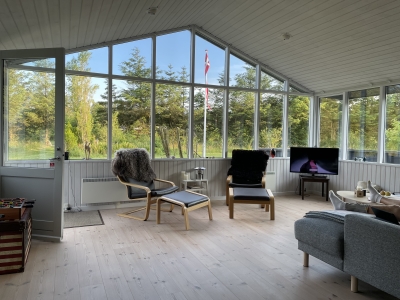
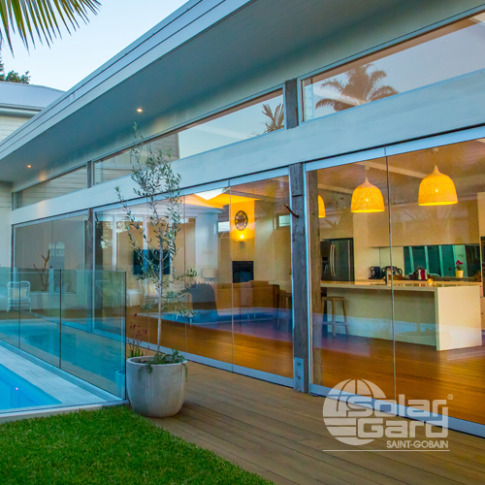
Whether you're interested in reducing fading of interior furnishings or creating a more comfortable environment throughout summer and winter, our wide range of solartek films offer a variety of colours and specifications to meet your specific needs.
Click on the different variations above to see how much light transmission and heat reflection each solar film offers.
The darker the solar film, the more effectively it reflects both light and heat, providing superior control over glare and sun exposure.
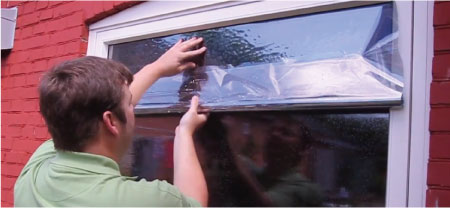
When installing outdoor solar film, it is crucial to choose a calm day with no direct sunlight on the window. This will ensure the perfect conditions for a seamless and effective installation of your new solar windowfilm.
Note!
These solar films are only intended for windows in buildings and cannot be used for cars.
The unique curvature of car windows, as opposed to the flat surfaces of building windows, necessitates specific solar film and installation techniques. Solar films designed for buildings lack the flexibility and adaptability required to effectively adhere to the curved surfaces of vehicle windows.
Whether you're interested in reducing fading of interior furnishings or creating a more comfortable environment throughout summer and winter, our wide range of solartek films offer a variety of colours and specifications to meet your specific needs.
Click on the different variations above to see how much light transmission and heat reflection each solar film offers.
The darker the solar film, the more effectively it reflects both light and heat, providing superior control over glare and sun exposure.
When installing outdoor solar film, it is crucial to choose a calm day with no direct sunlight on the window. This will ensure the perfect conditions for a seamless and effective installation of your new solar windowfilm.
Note!
These solar films are only intended for windows in buildings and cannot be used for cars.
The unique curvature of car windows, as opposed to the flat surfaces of building windows, necessitates specific solar film and installation techniques. Solar films designed for buildings lack the flexibility and adaptability required to effectively adhere to the curved surfaces of vehicle windows.
FAQ about Solar Film
- How do I clean windows with solar film?
- There is no adhesive on my window film!
- How much does window film reduce heat?
- Can window film replace air conditioning?
- How do I find out if I have energy-efficient windows?
- What are UVA, UVB, and UVC rays?
- Help, there are white streaks under my window film.

How do I clean windows with solar film?
Solar film can withstand mild soapy water. Many window cleaners today use washing systems with a pH value around 5, which over time will cause streaks on the solar film. Therefore, remember to inform the window cleaner that you have installed solar film externally. It's also not a good idea if they use a scraper to remove stubborn dirt.There is no adhesive on my window film!
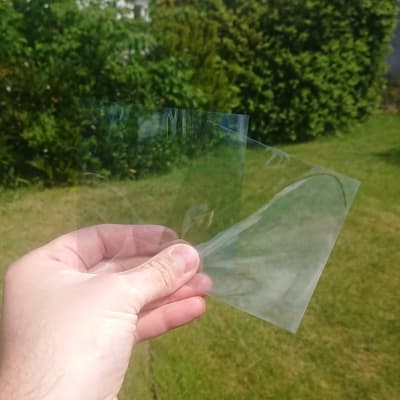
Yes, it is there!The window film is just so thin that you cannot see it with the naked eye, against the clear film/liner that protects the adhesive.
A simple tip to separate the film and the liner - Take two pieces of painter's tape and place them on opposite corners of the film, adhesive to adhesive, and gently pull them apart.
Now it can be seen. The part of the film without adhesive is the liner. Be careful not to get fingers on the adhesive, as it will be visible after installation.
How much does window film reduce heat?
It depends on the type of film you choose, but as a general rule, window film can reduce solar heat by up to 85%. The effect is greatest with exterior installation, as the sun's rays are blocked before they even hit the glass. With interior installation, the effect is somewhat lower since the heat has already entered the glass. The darker and more reflective the film, the more heat it reduces—but less light also passes through. Our lightest window film with 70% light transmission still provides noticeable heat reduction, while the darkest variants with 20% light transmission are optimal for offices and south-facing rooms with large windows.Can window film replace air conditioning?
Solar shading can significantly reduce the need for cooling. According to the Danish Energy Agency, it can reduce cooling needs by up to 70%. This is because a large portion of the heat in a room during summer comes directly from the sun through the windows. When window film blocks this heat entry, indoor temperatures rise more slowly and less frequently reach the critical level where air conditioning is necessary.Window film is particularly effective in:
- Offices and workplaces with large windows facing south or west
- Homes with many or large windows
- Rooms with screen work, where glare and heat pose a dual problem
Window film does not replace air conditioning in very hot climates or rooms with high internal heat production.
How do I find out if I have energy-efficient windows?
Method 1: The Lighter Method
This method can be used to test older windows.How to do it:
- Light a lighter and hold the flame close to the window from inside the room.
- Look for reflections of the flame in the glass – you should see four reflections.
- If one of the reflections has a different color (typically purple or greenish), it means the window has an energy coating.
On newer energy-efficient windows, this method may be less reliable as the coating is often more discreet.
Method 2: The Metal Detector Method
If the lighter method does not provide a clear answer, you can use a metal detector.How to do it:
- Use a metal detector, typically used to find wires in walls.
- Hold the metal detector against the window and see if it reacts.
- If the metal detector emits a sound or lights up, there is likely a metal coating in the window – which means it is an energy-efficient window.
Avoid testing near the edge of the window, as common double-glazed windows often have a metal edge that can give a false positive reaction.
What are UVA, UVB, and UVC rays?
UV radiation (ultraviolet radiation) is a type of electromagnetic radiation from the sun, invisible to the human eye. UV rays are divided into three main categories based on their wavelength:1. UVA (320-400 nm)
- Has the longest wavelength of the UV rays and can penetrate deeply into the skin.
- Accounts for about 95% of the UV radiation reaching the Earth's surface.
- Causes skin aging (wrinkles and pigmentation changes) and can contribute to skin cancer.
- Can penetrate through clouds and glass.
UVB (280-320 nm)
- Has a shorter wavelength than UVA and does not penetrate the skin as deeply.
- Is the primary cause of sunburn.
- Plays a critical role in the development of skin cancer and can directly damage DNA.
- Is partially blocked by the ozone layer, but some still reaches the Earth.
UVC (100-280 nm)
- Has the shortest wavelength and is the most energetic type of UV radiation.
- Is completely blocked by the ozone layer, so it does not reach the Earth's surface.
- Is used in disinfection and sterilization, as it effectively kills microorganisms.
UV radiation can have both beneficial and harmful effects. For example, UVB is necessary for the body's production of vitamin D, but excessive exposure increases the risk of skin damage and cancer. Therefore, it is important to protect against excessive UV exposure with sunscreen, clothing, and shade.
For further information, you can read more on the Danish Health Authority's fact sheet on ultraviolet radiation.
Help, there are white streaks under my window film.
White spots under the window film are often due to water or soap residues left under the film after installation.This can happen if:
- The water is not thoroughly squeegeed away during installation
- Installation occurs in direct sunlight, causing the water to evaporate too quickly
- Too much soap is used in the installation solution
- Water with high calcium content is used in the installation solution
In many cases, the spots disappear on their own once all the water and soap have dried.
This can take from a few days up to a week, depending on temperature and humidity.
Helpful tips:
- Be patient and allow the film to dry completely before assessing the result
- Avoid pressing or scraping the spots during the drying process
If the spots have not disappeared after 7-10 days, unfortunately, it may be necessary to remove the film and install a new one using the correct technique.